

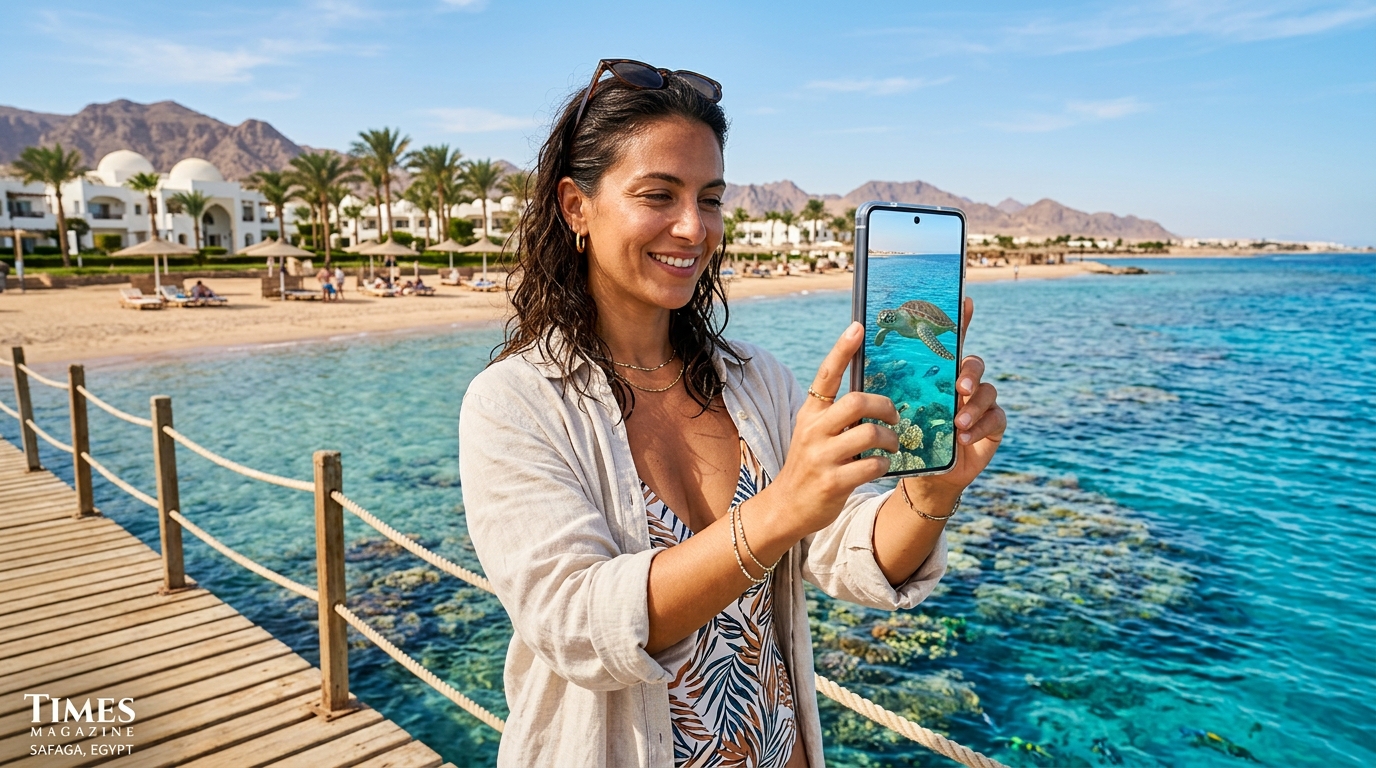
Augmented Reality (AR) has emerged as a game-changing technological force capable of propelling destination marketing into a more sustainable and economically vibrant future. While traditionally confined to high-end specialist applications, the rapid convergence of mobile web browsers and high-speed networks has given rise to Web-Based Augmented Reality (Web AR)—a frictionless, app-free digital paradigm where computer-generated 3D objects are overlaid directly onto physical environments through a simple smartphone camera tap.
In this landmark empirical study published in Sustainability (MDPI, 2025), Dr. Alaa Aggag and Professor Wael Kortam address critical knowledge gaps in destination marketing effectiveness. By developing an integrated conceptual model combining the Stimulus-Organism-Response (SOR) framework, the Technology Acceptance Model (TAM), and Flow Theory, the research investigates how Web AR technological attributes (Interactivity and Vividness) shape tourists' internal cognitive and affective states (Ease of Use, Usefulness, Certainty, Enjoyment, and Immersion), ultimately driving their intention to visit a specific tourism destination.
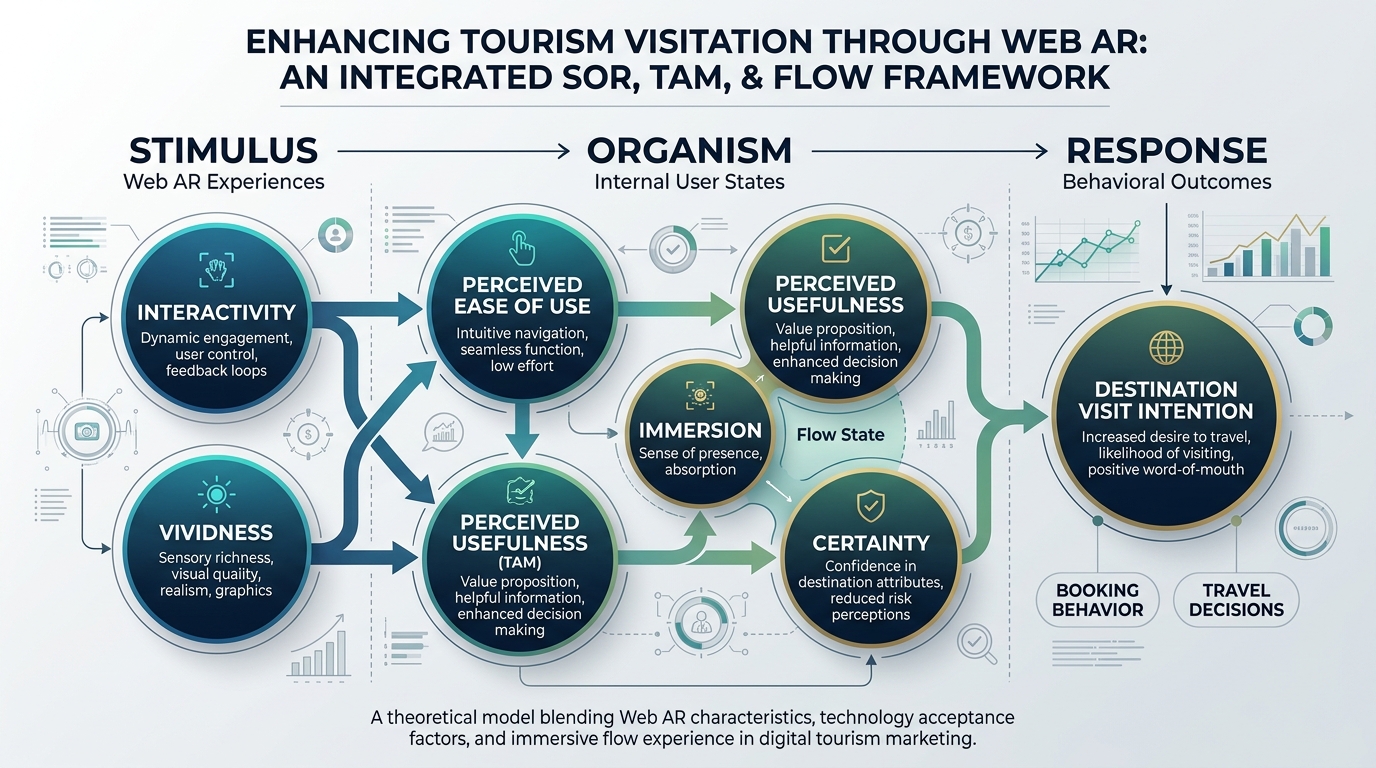
The Conceptual Framework: Fusing SOR, TAM, and Flow Theory
Traditional destination marketing relies heavily on static photos or linear promotional videos, which often leave prospective travelers with lingering decision uncertainty and pre-trip anxiety. The research team conceptualized Web AR as a powerful pre-booking "dreaming stage" intervention. Before committing to travel expenditures, prospective tourists can mentally visualize and interact with exotic destination features in a rich "phygital" space.
The operationalized model structures the tourist decision-making journey into three distinct phases:
- External Stimuli (S): Attributes of Web AR, specifically Interactivity (speed, range of content control, and responsiveness) and Vividness (clarity, depth, multi-sensory visual and audio quality).
- Tourist Organism (O): Internal cognitive drivers from TAM (Perceived Ease of Use, Perceived Usefulness, Perceived Certainty) alongside affective flow dimensions (Perceived Enjoyment, Perceived Immersion).
- Behavioral Response (R): Prospective tourists' definitive Destination Visit Intention.
Empirical Methodology & Red Sea Case Context
To validate the model empirically, the researchers conducted an experimental field study using Safaga on the Red Sea coast of Egypt—a world-renowned scuba diving hub highlighted by British DIVE Magazine. A convenience sample of 384 local and international tourists (64.6% female; 79.2% aged 18–34; 26.3% Egyptian, 73.7% international spanning 18 nationalities) engaged with an underwater Web AR experience featuring an interactive, 3D animated sea turtle. Participants could zoom, rotate, and reposition the sea turtle in real-time within their surrounding physical space without installing any mobile application.
Strict screening criteria ensured participants had never visited Safaga before, effectively eliminating prior perceptual biases and isolating the true promotional efficacy of the Web AR experience. Quantitative data collected via Likert-scale survey instruments were analyzed using Structural Equation Modeling (SEM) in AMOS 23.
Empirical Results & Structural Equation Modeling
The structural equation model demonstrated exceptional goodness-of-fit across 10 indices (χ²/df = 1.623, GFI = 0.900, CFI = 0.966, RMSEA = 0.040, RMR = 0.040). Path analysis supported all hypothesized relationships with high statistical significance (p < 0.001):
| Hypothesis Path | Standardized Path Coefficient (β) | Standard Error | Statistical Result |
|---|---|---|---|
| H1a: Interactivity → Perceived Ease of Use | 0.296 *** | 0.039 | Supported |
| H1b: Interactivity → Perceived Usefulness | 0.342 *** | 0.044 | Supported |
| H1c: Interactivity → Perceived Certainty | 0.203 *** | 0.051 | Supported |
| H1d: Interactivity → Perceived Enjoyment | 0.436 *** | 0.034 | Supported |
| H1e: Interactivity → Perceived Immersion | 0.284 *** | 0.033 | Supported |
| H2a: Vividness → Perceived Ease of Use | 0.456 *** | 0.045 | Supported |
| H2b: Vividness → Perceived Usefulness | 0.363 *** | 0.051 | Supported |
| H2c: Vividness → Perceived Certainty | 0.393 *** | 0.059 | Supported |
| H2d: Vividness → Perceived Enjoyment | 0.368 *** | 0.039 | Supported |
| H2e: Vividness → Perceived Immersion | 0.302 *** | 0.038 | Supported |
| H3: Perceived Ease of Use → Visit Intention | 0.212 *** | 0.023 | Supported |
| H4: Perceived Usefulness → Visit Intention | 0.305 *** | 0.018 | Supported |
| H5: Perceived Certainty → Visit Intention | 0.233 *** | 0.018 | Supported |
| H6: Perceived Enjoyment → Visit Intention | 0.309 *** | 0.027 | Supported |
| H7: Perceived Immersion → Visit Intention | 0.138 *** | 0.028 | Supported |
Key Insights & Practical Implications for DMOs
The empirical findings yield powerful actionable recommendations for Destination Management Organizations (DMOs) and tourism policymakers seeking to win global tourist market share:
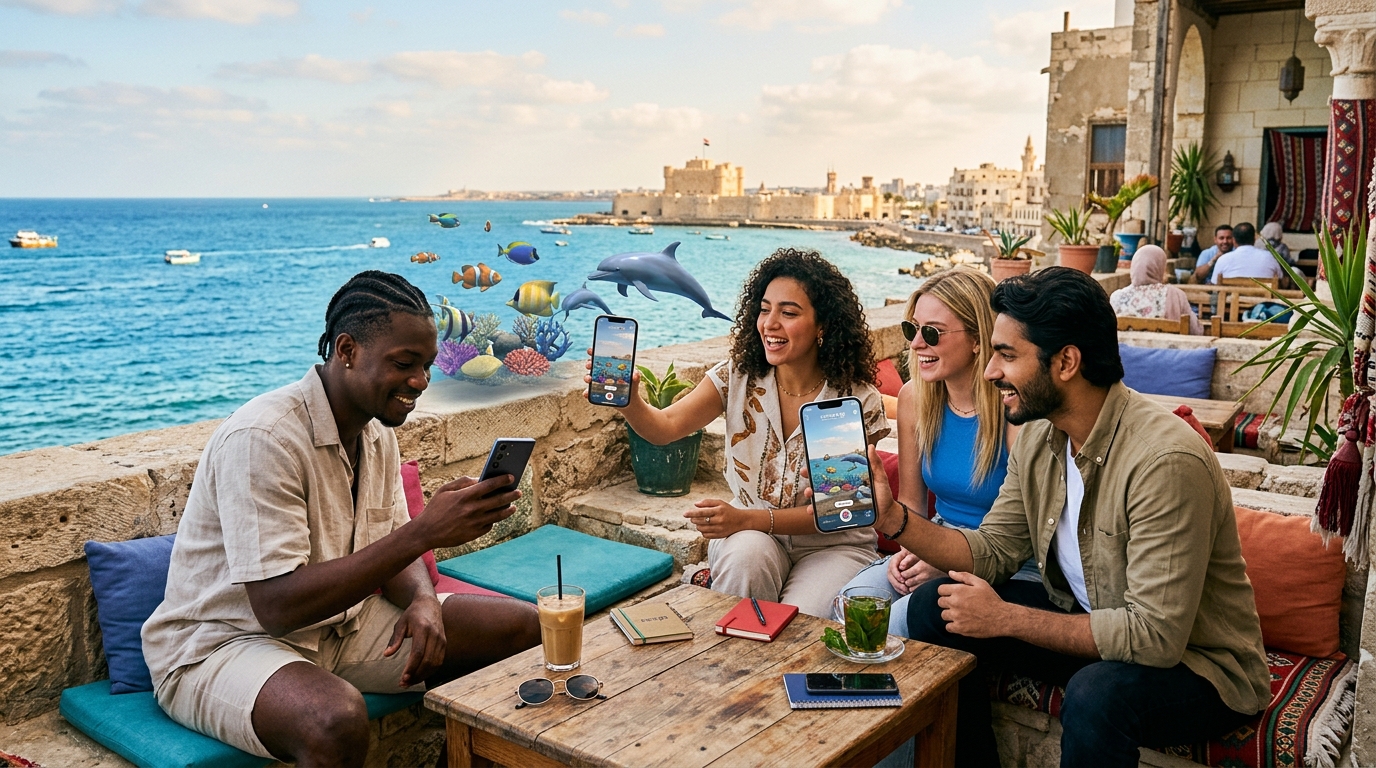
- Capitalize on Web AR Accessibility: Mobile app fatigue is a significant barrier. Web AR eliminates app store friction, enabling prospective travelers to launch immersive destination trials instantly via QR codes in print ads, social media links, or digital billboards.
- Mitigate Intangible Product Uncertainty: Tourism is an intangible experiential product. High visual vividness (β = 0.393) and real-time interactivity (β = 0.203) significantly bolster Perceived Certainty, overcoming traveler anxiety regarding unfamiliar destinations.
- Drive Sustainable Tourism Growth: Beyond economic benefits, Web AR can educate travelers on environmental conservation (e.g., coral reef protection and marine life preservation in Safaga), steering tourist behavior toward eco-friendly practices prior to arrival.

Executive Takeaways for Tourism Leaders
- Web AR significantly enhances destination visit intention by driving cognitive ease of use (β = 0.212), usefulness (β = 0.305), certainty (β = 0.233), enjoyment (β = 0.309), and immersion (β = 0.138).
- Vividness is the strongest driver of user-friendly technology perception (β = 0.456) and destination certainty (β = 0.393).
- App-free Web AR deployment provides universal reach, capturing high-intent young travelers (79.2% aged 18–34) during the critical pre-booking dreaming stage.
برز الواقع المعزز (AR) كقوة تكنولوجية تحولية قادرة على دفع التسويق السياحي نحو مستقبل أكثر استدامة وازدهاراً اقتصادياً. وبينما كان اقتناء هذه التقنية مقتصراً في السابق على التطبيقات المتخصصة عالية التكلفة، فإن التقارب السريع بين متصفحات الهواتف المحمولة والشبكات عالية السرعة أدى إلى ظهور الواقع المعزز عبر الإنترنت (Web AR)—وهو نموذج رقمي خفيف وخالٍ من التعقيدات، يتيح تركيب الأجسام ثلاثية الأبعاد التفاعلية على البيئة الحقيقية مباشرة عبر كاميرا الهاتف دون الحاجة لتنزيل أي تطبيقات.
في هذه الدراسة التطبيقية البارزة المنشورة في دورية Sustainability العالمية (MDPI, 2025)، تناول الدكتور علاء عجاج والأستاذ الدكتور وائل قرطام الفجوات المعرفية الرئيسية في فاعلية التسويق السياحي. ومن خلال تطوير نموذج مفاهيمي متكامل يجمع بين إطار المثير والمنبه والاستجابة (S-O-R)، ونموذج قبول التكنولوجيا (TAM)، وظرية التدفق (Flow Theory)، تناولت الدراسة كيف تؤثر خصائص Web AR (التفاعلية والوضوح) في الحالات المعرفية والعاطفية الداخلية للسياح (سهولة الاستخدام، الفائدة، اليقين، الاستمتاع، والاندماج)، مما يوجه في النهاية نية زيارة الوجهة السياحية.
الإطار المفاهيمي: دمج نظريات SOR و TAM والتدفق
يعتمد التسويق السياحي التقليدي بشكل كبير على الصور الثابتة أو مقاطع الفيديو الترويجية الخطية، والتي غالباً ما تترك لدى المسافرين المرتقبين حالة من عدم اليقين وشكوك اتخاذ القرار قبل السفر. صمم الفريق البحثي الواقع المعزز عبر الإنترنت كتدخل استراتيجي في "مرحلة الحلم" السابقة للحجز، حيث يمكن للسياح المرتقبين معايشة الوجهة السياحية وتخيلها تفاعلياً في مساحة "فيجيتال" تجمع بين العالم الواقعي والرقمي.
النتائج التطبيقية والتوصيات الاستراتيجية
أظهرت نتائج النمذجة بالمعادلات البنائية (SEM) على عينة من ٣٨٤ سائحاً محلياً ودولياً في منطقة سفاجا بالبحر الأحمر أن التفاعلية والوضوح المباشر يرفعان من يقين المسافر بنسبة عالية، ويقضيان على مخاطر السفر إلى وجهات غير معروفة. ويوصي الباحثون مؤسسات إدارة الوجهات السياحية في مصر والعالم العربي بالاعتماد على Web AR كوسيلة تسويقية مستدامة تجمع بين النمو الاقتصادي والحفاظ على البيئة البحرية.
أهم التوصيات التنفيذية للقيادات السياحية
- يعزز Web AR نية زيارة الوجهات السياحية من خلال رفع سهولة الاستخدام وفائدة التجربة واليقين والاستمتاع والاندماج.
- يمثل وضوح العرض الركيزة الأقوى لرفع يقين السائح بالوجهة وتخفيف مخاوف ما قبل السفر.
- التطبيق الفوري عبر Web AR بدون تنزيل تطبيق يوفر انتشاراً عالمياً واسعاً يستهدف الفئات الشابة والنشطة.