Assessing Emotional Intelligence Competencies in Public Sector Petroleum Companies in Egypt تقييم كفايات الذكاء العاطفي في شركات البترول التابعة للقطاع العام في مصر



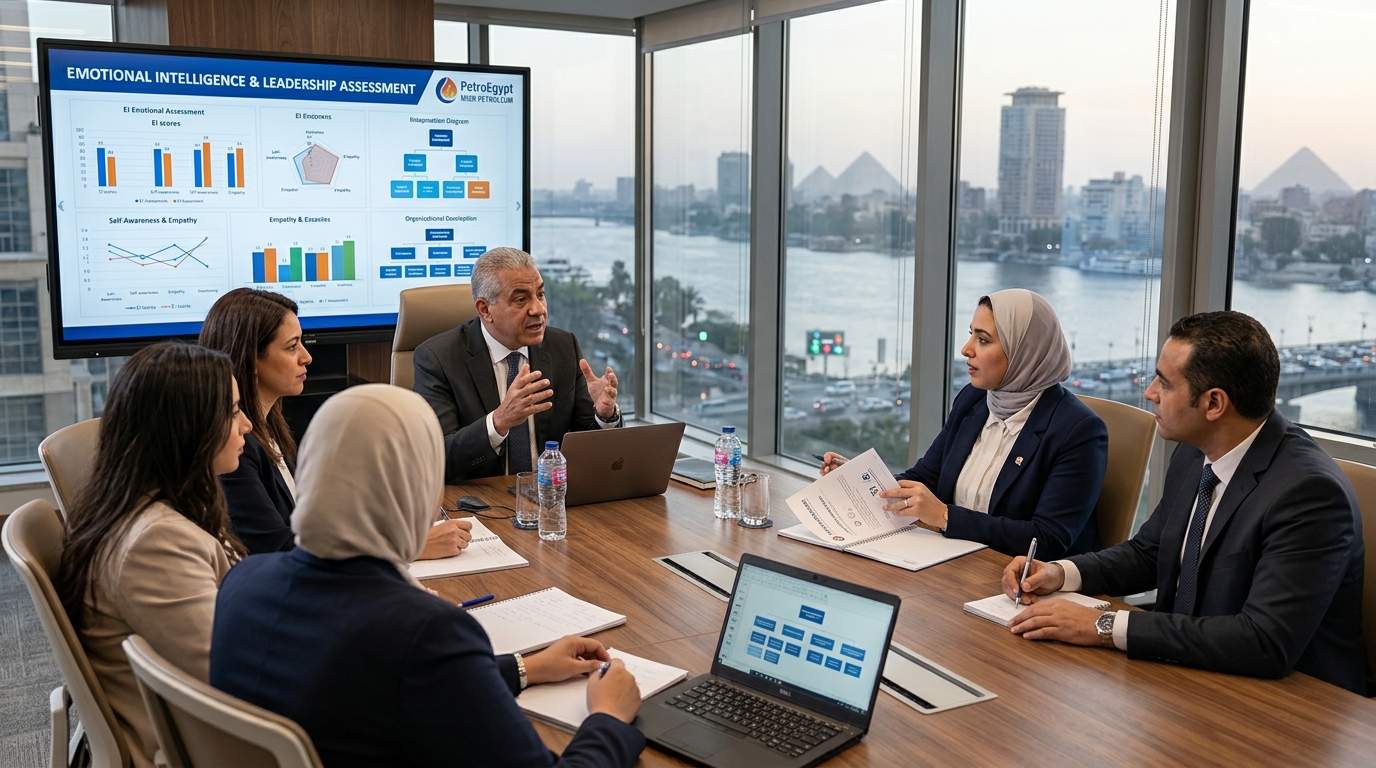
1. The Public Sector Employment Dilemma & Employability Challenge ١. معضلة التوظيف بالقطاع العام وتحديات الجاهزية المهنية
Employment remains one of the most pressing socio-economic imperatives facing Egypt today. While securing employment in either the public or private sector presents substantial hurdles, positions within state-owned petroleum enterprises have historically been among the most sought-after careers in the country. These organizations offer above-average government compensation packages, high job security, relaxed working conditions, and a strong reliance on seniority-based promotion rather than rigorous performance-based assessment.
تظل قضية التوظيف واحدة من أهم التحديات الاقتصادية والاجتماعية التي تواجه مصر اليوم. ورغم أن الحصول على فرصة عمل في أي من القطاعين العام أو الخاص يمثل مهمة شاقة، إلا أن الوظائف في شركات البترول المملوكة للدولة تعد من أكثر الوظائف جاذبية، نظرًا لما تقدمه من رواتب تفوق متوسط أجور القطاع الحكومي، واستقرار وظيفي مرتفع، إلى جانب الاعتماد المباشر على الترقية بالأقدمية بدلاً من التقييم القائم على الجدارة والأداء.
However, this desirable employment environment has created a persistent organizational paradox. Because petroleum positions are exceptionally competitive, recruitment processes historically succumbed to societal influence and non-meritocratic selection. Consequently, newly hired personnel often reflected the broader limitations of the national educational system, resulting in noticeable skill mismatches and capacity deficits. To address these systemic gaps, organizations cannot simply rely on firing or replacing personnel; rather, unconventional capacity-building frameworks must be deployed to elevate the performance of existing staff.
غير أن بيئة التوظيف الجذابة هذه أوجدت مفارقة تنظيمية مستمرة. فنظرًا للتنافس الشديد على وظائف البترول، خضعت عمليات التوظيف تاريخيًا لتأثيرات المحسوبية والروابط الاجتماعية، مما أدى في كثير من الأحيان إلى تعيين كفاءات لا تلبي المتطلبات التشغيلية الكاملة. ولعلاج هذه الفجوات الهيكلية، لا يمكن للمؤسسات الاستغناء عن العمالة الحالية، بل يتعين تطبيق أطر مبتكرة لبناء القدرات وتطوير مهارات العاملين الموجودين بالفعل.
"Emotional Intelligence (EI) must not be developed in isolation as an autonomous phenomenon, but rather as an integrated package combining both emotional and cognitive intelligence enhancement within clear organizational boundaries." — Prof. Dr. Hazem Halim et al. "لا ينبغي تطوير الذكاء العاطفي كظاهرة مستقلة بمعزل عن العناصر الأخرى، بل يجب تنميته كحزمة متكاملة تجمع بين تعزيز الذكاء العاطفي والمعرفي داخل أطر تنظيمية واضحة." — أ.د. حازم حليم وآخرون.
2. The ESCI 3.0 Assessment Framework ٢. إطار التقييم بمقياس ESCI 3.0
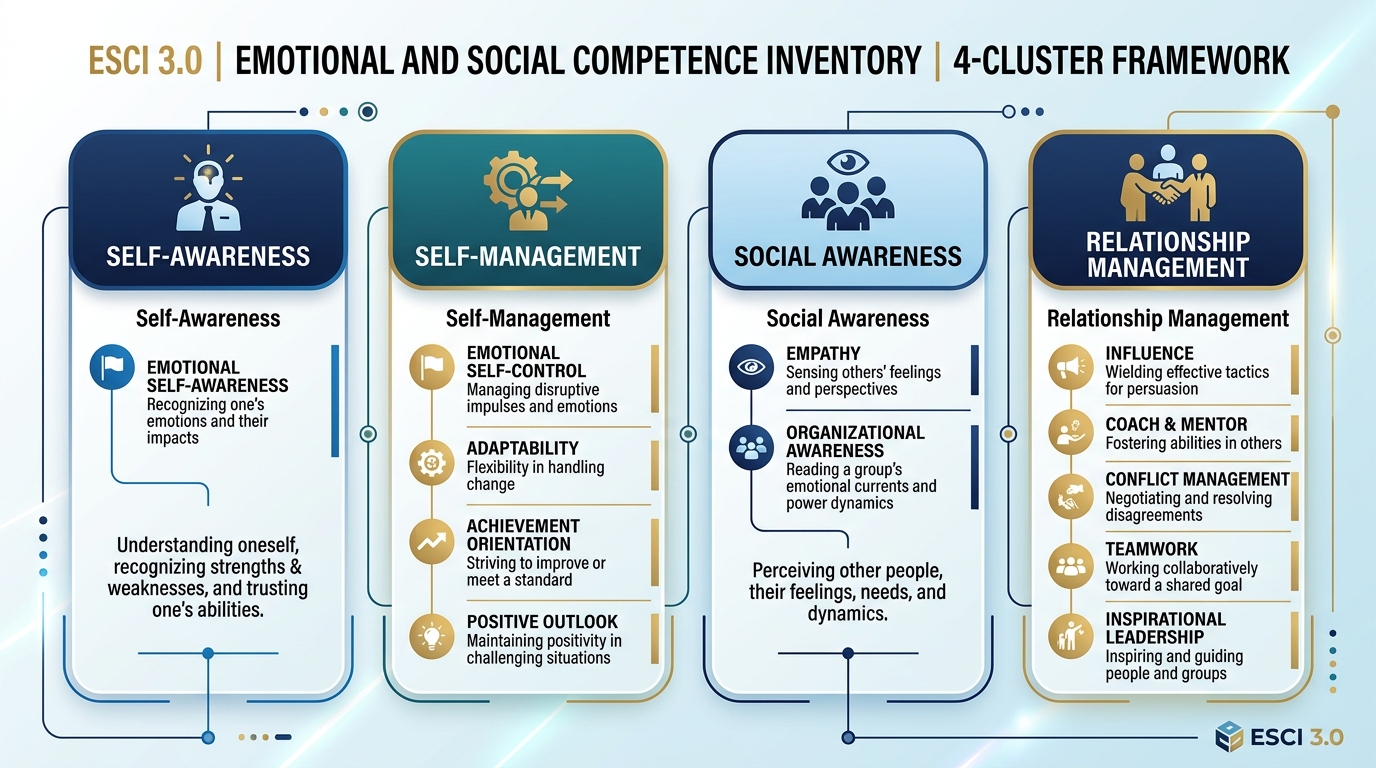
To evaluate the emotional intelligence profile of public sector energy workers, the study utilized the pretested Emotional and Social Competence Inventory (ESCI 3.0), developed jointly by Hay/McBer, Daniel Goleman, and Richard Boyatzis. The ESCI 3.0 instrument measures 12 emotional and social competencies structured across four master clusters:
لتقييم مستوى الذكاء العاطفي لدى العاملين بشركات القطاع العام للبترول، اعتمدت الدراسة على مقياس الكفايات العاطفية والاجتماعية (ESCI 3.0) المطور بواسطة (Hay/McBer) ودانيال جولمان وريتشارد بوياتزيس. يقيس هذا المقياس 12 كفاية عاطفية واجتماعية تتوزع على أربع مجموعات رئيسية:
- Self-Awareness: Emotional Self-Awareness (recognizing one's emotions and their impact).
- Self-Management: Emotional Self-Control, Adaptability, Achievement Orientation, Positive Outlook.
- Social Awareness: Empathy, Organisational Awareness (reading group emotional currents and power dynamics).
- Relationship Management: Conflict Management, Coach and Mentor, Influence, Inspirational Leadership, Teamwork.

3. Empirical Findings & Perception Gap Analysis ٣. النتائج التجريبية وتحليل الفجوة الإدراكية
Data were collected via a 360-degree survey administered across 60 middle and senior managers and employees operating within 7 fully government-owned petroleum enterprises in Egypt (representing approximately 60% of the entire state petroleum sector). Each employee conducted a self-assessment, while their direct managers independently evaluated them across all 68 behavioral anchors.
تم جمع البيانات من خلال استبيان 360 درجة تم توزيعه على 60 موظفًا ومديرًا في المستويات الوسطى والعليا عبر 7 شركات بترول حكومية بالكامل في مصر (تمثل نحو 60% من إجمالي القطاع العام للبترول). أجرى كل موظف تقييمًا ذاتيًا لنفسه، بينما قام مدراؤهم المباشرون بتقييمهم بشكل مستقل عبر 68 مؤشرًا سلوكيًا.
Table 1: Paired t-Test Comparison Between Employee Self-Assessments and Managerial Evaluations (N = 60) جدول ١: مقارنة اختبار (t) المزدوج بين التقييم الذاتي للموظفين وتقييمات المديرين (العينة = ٦٠)
| ESCI Cluster & Competencyالمجموعة والكفاية | Employee Meanمتوسط الموظفين | Manager Meanمتوسط المديرين | t-Valueقيمة t | Significance (p)الدلالة الإحصائية |
|---|---|---|---|---|
| Self-Awareness | 48.85 | 49.03 | -0.160 | 0.870 (NS) |
| Emotional Self-Control | 10.93 | 10.35 | 1.730 | 0.089 (NS) |
| Adaptability | 33.08 | 31.68 | 1.860 | 0.068 (NS) |
| Positive Outlook | 19.40 | 17.95 | 2.770 | 0.007** |
| Empathy | 32.95 | 32.30 | 0.810 | 0.419 (NS) |
| Influence (Rel. Mgmt) | 11.18 | 9.50 | 3.190 | 0.002* (Significant) |
| Inspirational Leadership | 10.32 | 8.65 | 3.280 | 0.002* (Significant) |
| Teamwork | 12.65 | 11.80 | 2.340 | 0.022* (Significant) |
As demonstrated in Table 1, the paired t-test results reveal highly significant statistical discrepancies between employee self-perceptions and manager evaluations in the Relationship Management cluster—specifically for Influence ($t = 3.19, p = 0.002$), Inspirational Leadership ($t = 3.28, p = 0.002$), and Teamwork ($t = 2.34, p = 0.022$). Employees systematically rated their persuasive, leadership, and collaborative abilities higher than their managers observed in daily operations.
كما يوضح جدول 1، كشفت نتائج اختبار (t) المزدوج عن وجود فجوات إحصائية ذات دلالة عالية بين إدراك الموظفين لذواتهم وتقييم المديرين في مجموعة إدارة العلاقات—تحديدًا في كفايات التأثير ($t = 3.19, p = 0.002$)، والقيادة الإلهامية ($t = 3.28, p = 0.002$)، والعمل الجماعي ($t = 2.34, p = 0.022$). حيث يميل الموظفون بشكل منتظم لمنح أنفسهم درجات أعلى في التأثير والقيادة مقارنة بما يلاحظه المدراء في بيئة العمل الواقعية.
4. Strategic Action Plan for Public Sector HR Leaders ٤. خطة العمل الاستراتيجية لقادة الموارد البشرية بالقطاع العام
The empirical findings demonstrate that over 60% of employees in public sector petroleum enterprises operate at low overall EI levels, while the majority of remaining personnel sit in the "Moderate" competency tier. To transform these workforce deficits into operational strengths, Bridgefield Management Consultancy recommends a four-stage intervention:
أظهرت النتائج الميدانية أن أكثر من 60% من العاملين بشركات البترول الحكومية يمتلكون مستويات منخفضة من الذكاء العاطفي الإجمالي، بينما يقع معظم الباقين في المستوى "المتوسط". ولتحويل هذه الفجوات إلى نقاط قوة تشغيلية، توصي بريدج فيلد للاستشارات الإدارية بتطبيق استراتيجية تحول من أربع مراحل:
- Restructure Recruitment to Restrain Nepotism: Incorporate objective ESCI 3.0 emotional intelligence benchmark testing into mandatory pre-employment assessments alongside technical evaluations to ensure merit-based hiring.
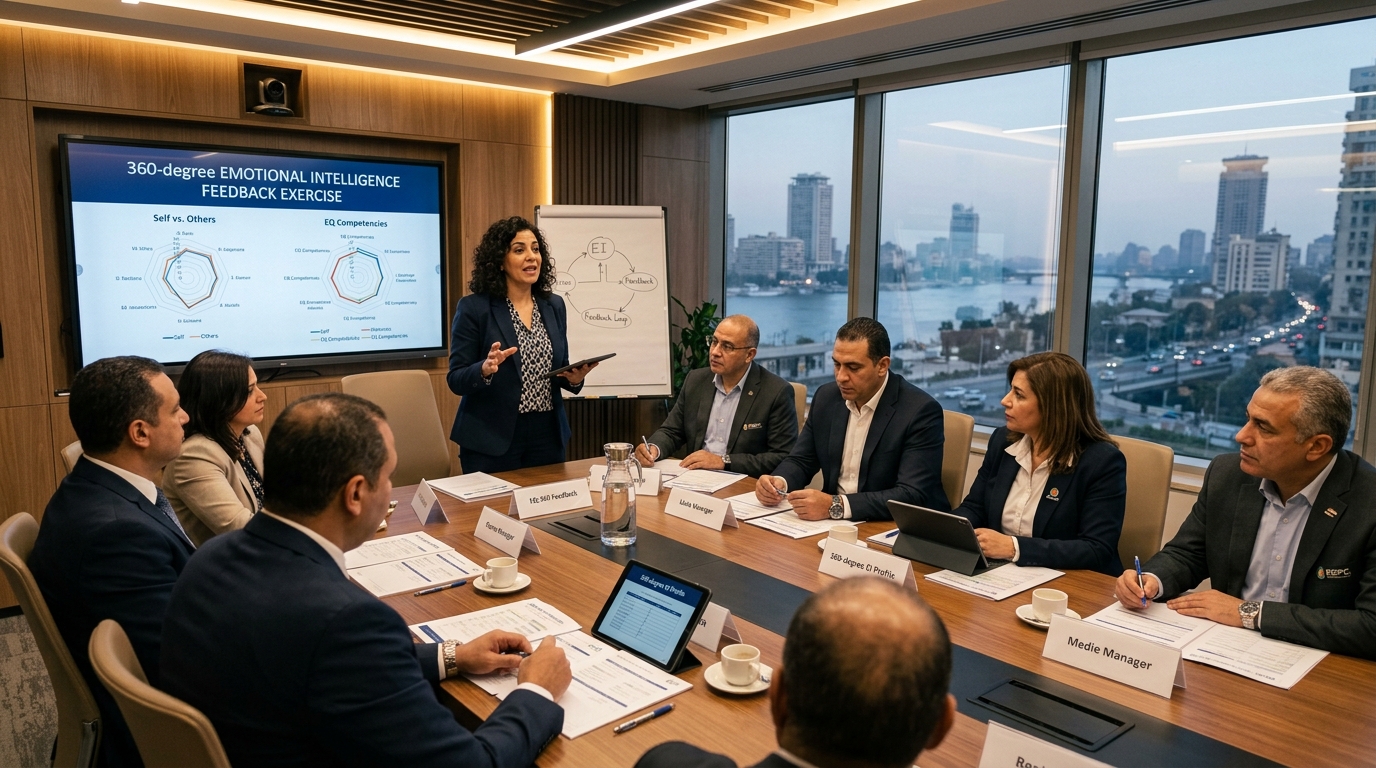
- Deploy Continuous 360-Degree Feedback Loops: Establish annual multi-rater feedback mechanisms between managers and subordinates to collapse perception blind spots in Influence and Inspirational Leadership.
- Deliver Interrelated Cognitive + Emotional Capacity Building: Design executive training modules that pair technical operational problem-solving with emotional self-control, conflict resolution, and stress management.
- Institutionalize Managerial Coaching Culture: Transition middle managers from autocratic compliance monitors into active developmental coaches capable of nurturing team agility and psychological safety.
Published by Bridgefield Management Consultancy • Cairo, Egypt • September 2026 نُشر بواسطة بريدج فيلد للاستشارات الإدارية • القاهرة، مصر • سبتمبر ٢٠٢٦