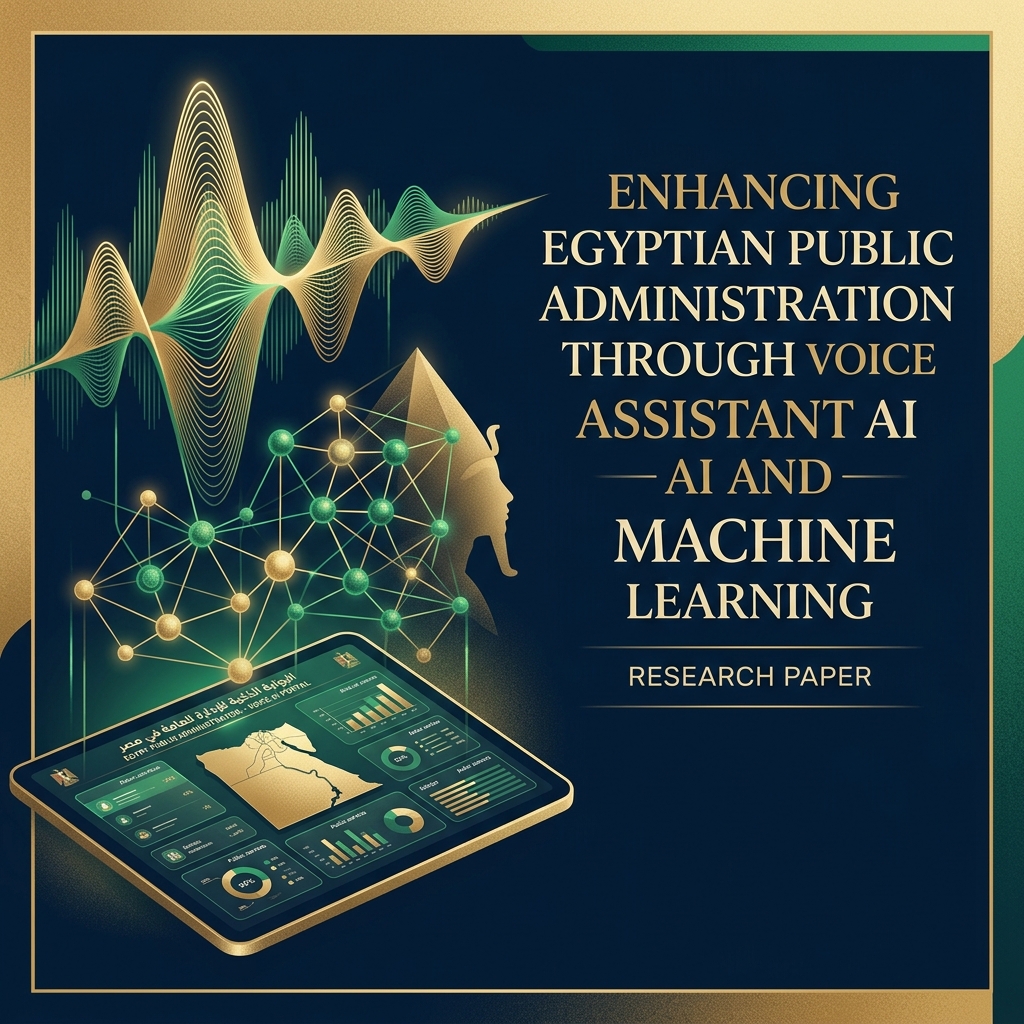
Evaluating Egyptian Citizens' Perception Toward Introducing Voice Assistant Technology as a Means of Improving Public Service Delivery: Utilizing Machine Learning as an Additional Perception's Predictor تقييم انطباعات المواطنين المصريين نحو إدخال تقنية المساعد الصوتي كأداة لتطوير تقديم الخدمات العامة: استخدام التعلم الآلي كمتنبئ إضافي للقبول
A comprehensive case study extending the Technology Acceptance Model (TAM) with trustworthiness and risk factors, coupled with 10 Machine Learning algorithms to forecast e-government AI adoption in Egypt. دراسة حالة شاملة توسع نموذج قبول التكنولوجيا (TAM) بإضافة عوامل الثقة والمخاطر، مع تطبيق ١٠ خوارزميات للتعلم الآلي للتنبؤ بتبني الذكاء الاصطناعي في الخدمات الحكومية المصرية.


Case Study Executive Abstract الملخص التنفيذي لدراسة الحالة
Purpose & Approach: This empirical case study evaluates the readiness and inclination of Egyptian citizens toward adopting Voice Assistant Technology (VAT) for public service delivery. Combining a mixed-method design—surveying 398 citizens and interviewing 14 software and telecommunication experts—with an extended Technology Acceptance Model (TAM) integrating Perceived Usefulness, Ease of Use, Trustworthiness, and Perceived Risk, 10 Machine Learning (ML) algorithms were deployed in Python to forecast citizen adoption behavior. الهدف والمنهجية: تقيّم هذه الدراسة مدى استعداد وتوجه المواطنين المصريين نحو تبني تقنية المساعد الصوتي (VAT) لتقديم الخدمات العامة. تجمع الدراسة بين استبيان شمل ٣٩٨ مواطناً ومقابلات مع ١٤ خبيراً في البرمجيات والاتصالات، مع نموذج قبول التكنولوجيا الممتد (TAM)، فضلاً عن تدريب ١٠ خوارزميات للتعلم الآلي للتنبؤ بسلوك القبول.
1. Introduction & Public Sector AI Integration ١. المقدمة والدمج الذكي للتكنولوجيا في القطاع الحكومي
The rapid emergence of Artificial Intelligence (AI) and Machine Learning (ML) is redefining citizen interactions with public service bodies worldwide. Voice Assistant Technology (VAT)—encompassing solutions such as Google Assistant, Amazon Alexa, and customized enterprise voice engines—enables natural language human-computer interaction, offering unprecedented accessibility, speed, and inclusiveness for public service administration. يعيد التوسع السريع للذكاء الاصطناعي (AI) والتعلم الآلي (ML) صياغة كيفية تفاعل المواطنين مع الهيئات الحكومية الإدارية حول العالم. تتيح تقنيات المساعد الصوتي (VAT) تفاعلاً طبيعياً بلغة بشرية سلسة، مما يوفر مستويات غير مسبوقة من الوصول والسرعة والشمولية لتقديم الخدمات العامة.
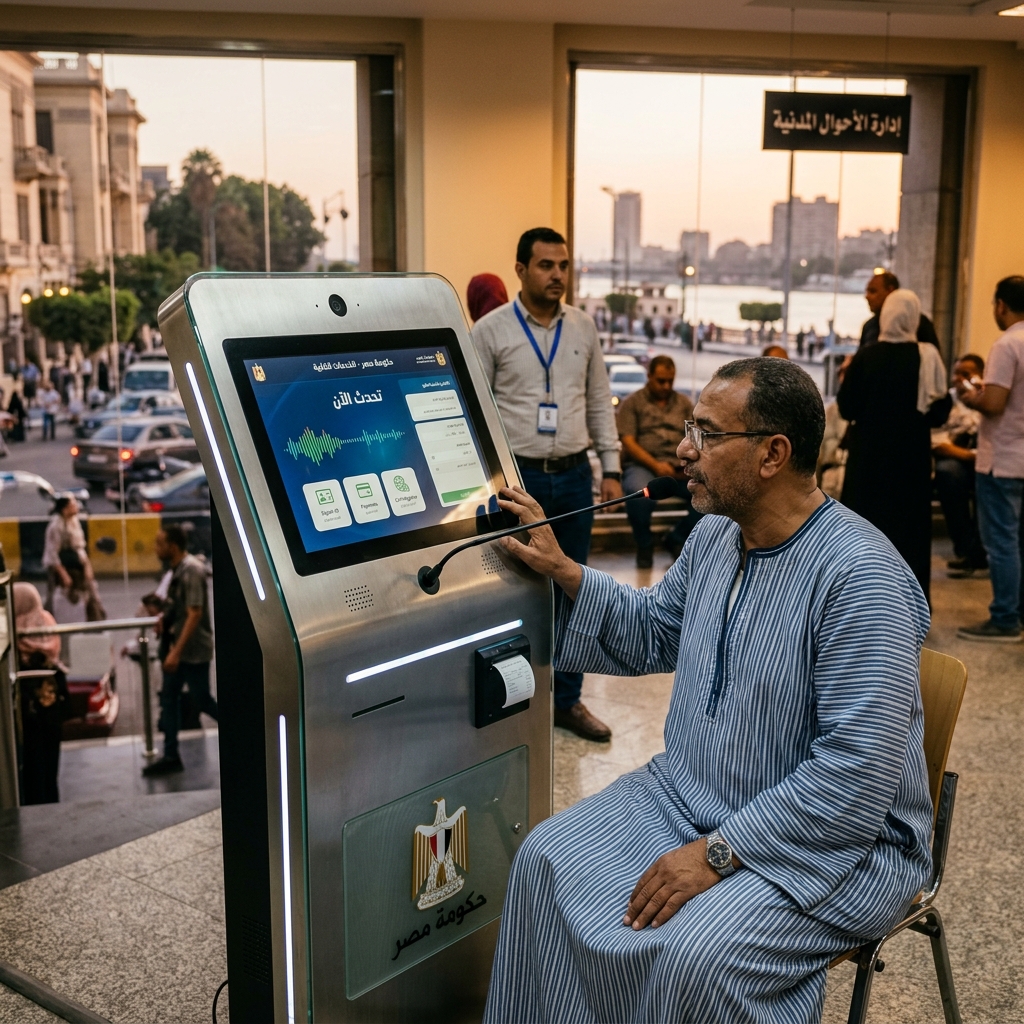
In high uncertainty-avoidance environments such as Egypt, institutional trust, cyber security, and perceived risk play a decisive role in governing technology adoption. While developed nations have integrated virtual assistants into e-government portals, this case study bridges a crucial empirical gap by validating adoption parameters alongside predictive computational algorithms. وفي البيئات المتحفظة ثقافياً تجاه المخاطر والمجهول مثل مصر، تلعب الثقة المؤسسية والأمن السيبراني والمخاطر المدركة دوراً حاسماً في تنظيم تبني التكنولوجيا. وتقدم دراسة الحالة هذه حلولاً تجريبية لربط قبول المواطنين بالنماذج الحسابية التنبؤية.
Figure 3: Extended Technology Acceptance Model (TAM) Conceptual Architecture الشكل ٣: الإطار الهيكلي المفاهيمي لنموذج قبول التكنولوجيا الممتد (TAM)
2. Empirical Methodology & Machine Learning Execution ٢. المنهجية الميدانية وتنفيذ خوارزميات التعلم الآلي
A rigorous mixed-method design integrated quantitative data from 398 technologically literate citizens with qualitative insights from 14 software coding and telecommunications maintenance engineers (WE Egypt). Multiple linear regression in SPSS v28 established statistical significance ($p < 0.05$), demonstrating that Usefulness ($\beta = 0.316$) and Trustworthiness ($\beta = 0.284$) positively drive acceptance, whereas Perceived Risk ($\beta = -0.105$) operates as a major barrier. اعتمد تصميم البحث على دمج البيانات الكمية لـ ٣٩٨ مواطناً مع مقابلات نوعية مع ١٤ مهندس برمجيات واتصالات بشركة المصرية للاتصالات (WE). وأثبت الانحدار الإحصائي دلالة معنوية لـ الفائدة المدركة ($\beta = 0.316$) والجدارة بالثقة ($\beta = 0.284$) كداعمين للقبول، بينما أظهرت المخاطر المدركة ($\beta = -0.105$) عائقاً سلبيًا.
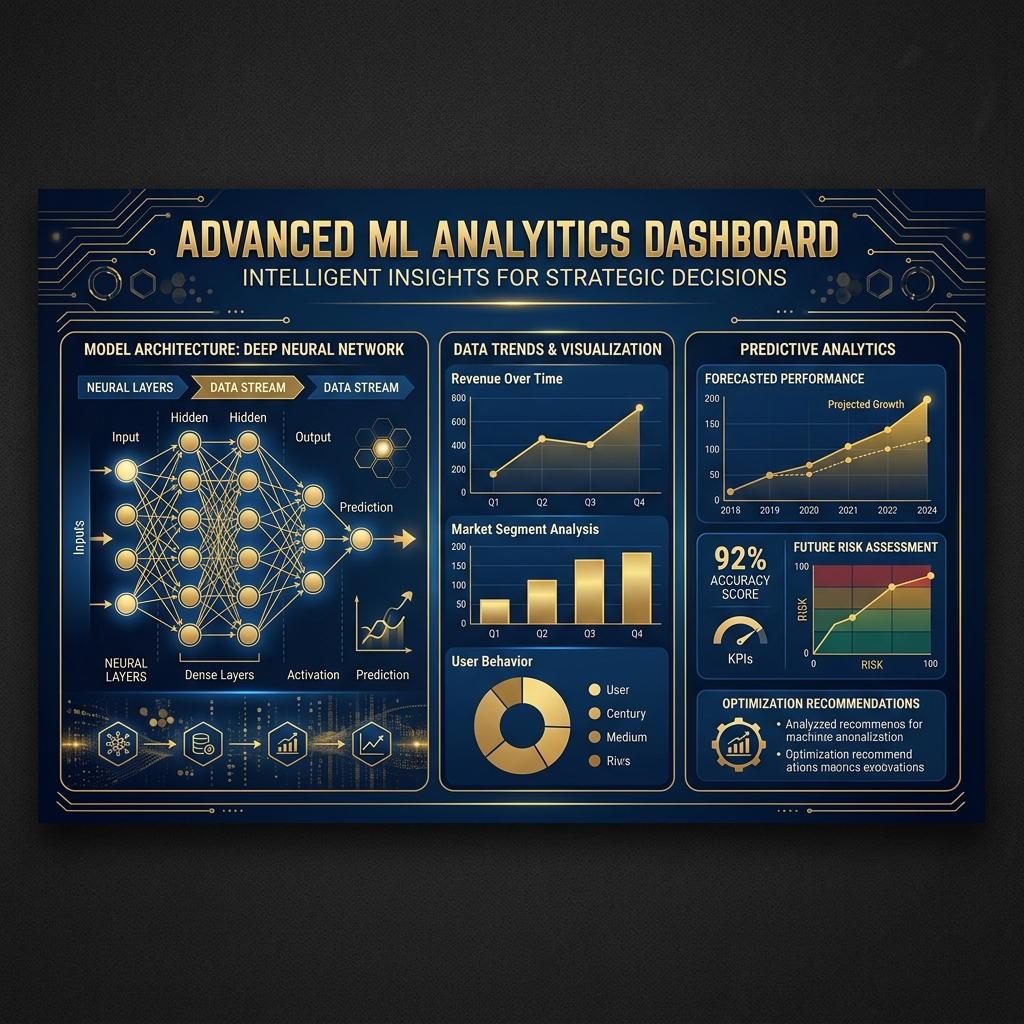
| Machine Learning Algorithm | MSE | RMSE | MAE | Prediction Accuracy Level |
|---|---|---|---|---|
| Stochastic Gradient Descent (SGD) | 0.3459 | 0.5881 | 0.4186 | 71.92% (Top Performer) |
| Ridge Regression | 0.3581 | 0.5984 | 0.4213 | 70.94% (Top Performer) |
| Support Vector Machine (SVM) | 0.3884 | 0.6232 | 0.4312 | 68.48% |
| k-Nearest Neighbors (k-NN) | 0.3994 | 0.6320 | 0.4825 | 67.58% |
| Gradient Boosting Machine | 0.4008 | 0.6331 | 0.4556 | 67.46% |
| Decision Tree | 0.6243 | 0.7901 | 0.5238 | 49.33% (Underperformed) |
The Voice Revolution in Public Administration: Strategic Outcomes & Future Policy Directives ثورة الصوت في الإدارة العامة: المخرجات الاستراتيجية والتوجيهات التنفيذية المستقبليّة
How computational analytics and citizen trust frameworks are reshaping government service delivery across Egypt. كيف تشكل التحليلات الحسابية وأطر ثقة المواطنين مستقبل تقديم الخدمات الحكومية في مصر.

1. Hybrid Dual Transition Model ١. نموذج الانتقال الهجين المزدوج
Public administration agencies should implement a phased, dual-track service delivery mechanism. Operating automated AI voice assistants alongside traditional human customer service desks ensures that citizens transition smoothly without alienating non-digitally fluent or elderly populations. يجب على الجهات الحكومية تطبيق آلية تقديم خدمات هجينة ومزدوجة. إن تشغيل المساعدات الصوتية الذكية جنباً إلى جنب مع المكاتب التقليدية يضمن انتقال المواطنين بمرونة دون إقصاء كبار السن أو غير الملمين بالتكنولوجيا.
2. Institutional Trust & Risk Safeguards ٢. ضمانات الثقة المؤسسية والحماية من المخاطر
Because trustworthiness ($\beta = 0.284$) and perceived risk ($\beta = -0.105$) directly govern adoption intention, government voice portals must integrate visible data encryption badges, vocal transaction confirmations, and clear privacy disclosures. نظراً لأن الجدارة بالثقة والمخاطر المدركة تؤثران مباشرة على نية التبني، يجب أن تتضمن البوابات الصوتية الحكومية إشارات تشفير مرئية وتأكيدات صوتية للعمليات وبيانات خصوصية واضحة.
3. Youth-Driven Digital Acceleration ٣. التسريع الرقمي الموجه للشباب
With an 84.5% mobile smartphone adoption rate among Egyptian youth (ages 18–29), early-stage rollout campaigns should target Gen Z and Millennials as primary champions to foster nationwide social momentum and digital normalization. مع استئثار الشباب بمعدل وصول للهواتف الذكية يصل إلى ٨٤.٥٪، ينبغي أن تستهدف حملات الإطلاق جيل الشباب كأبطال للتغيير لبناء زخم اجتماعي وتطبيع استخدام الذكاء الاصطناعي.
4. Machine Learning Predictive Governance ٤. الحوكمة التنبؤية بالتعلم الآلي
Deploying high-accuracy ML algorithms (Stochastic Gradient Descent: 71.92%, Ridge Regression: 70.94%) empowers public sector leaders to forecast regional adoption rates, optimize IT infrastructure investment, and dynamically tailor civic awareness campaigns. يتيح نشر خوارزميات التعلم الآلي عالية الدقة (SGD بنسبة ٧١.٩٢٪ وريدج بنسبة ٧٠.٩٤٪) لقيادات القطاع العام التنبؤ بمعدلات القبول الإقليمية وتخصيص الموارد التقنية بديناميكية.
Halim, Y., Halim, H., Salem, K., & Lewaaelhamd, I. (2026). Evaluating Egyptian citizens' perception toward introducing voice assistant technology as a means of improving public service delivery: utilizing machine learning as an additional perception's predictor. Bridgefield Publications Case Study, Ref. Future Business Journal 11:242. https://doi.org/10.1186/s43093-025-00662-z